

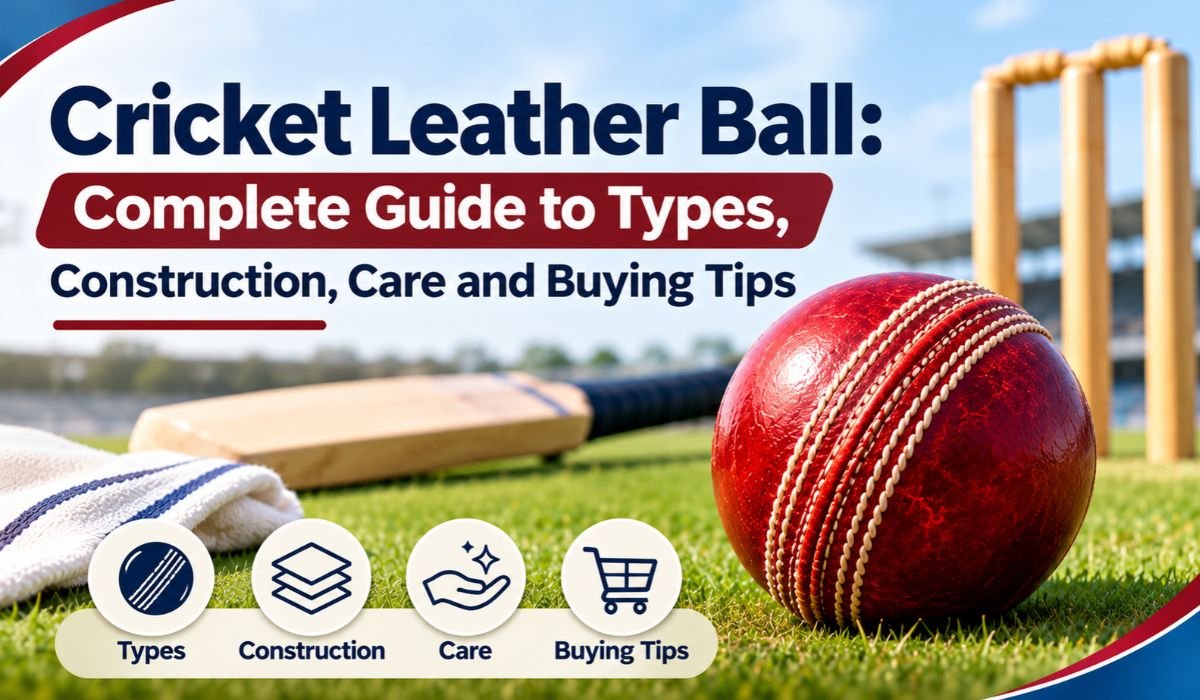
The cricket leather ball has a great deal of history behind it. In fact, for over three hundred years, this relatively small, very firm, cork-filled sphere has influenced how bowlers approach their task, how batsmen protect themselves, and how fielders respond. Whether you are purchasing your first cricket leather ball or taking care of a club’s equipment, understanding how the ball is produced, how it acts, and how to maintain it can help you enhance your performance on the field and potentially save you money.
What Is a Cricket Leather Ball?
A cricket leather ball is a very tough ball with a cork center that is wrapped in many layers of tightly wound string, then covered with a layer of dyed leather that has been sewn on by hand or machine. It also has a raised seam running around the outside of the ball; it is this seam that allows the bowler to create swing, movement off the pitch, and unpredictable bounces. This type of ball is used for Test cricket, One Day Internationals (ODI’s), Twenty20 leagues, first class cricket and high-level club cricket worldwide.
Cricket’s rules are very strict about how much equipment can weigh and how big it can be. This allows the game to remain as fair as possible, no matter where it is being played; whether it’s at Lord’s, in Melbourne, or on a dirt patch in Uttar Pradesh.
A Short History of the Ball
The early forms of cricket ball were crude, made by hand, and very inconsistent. In the 1760s, the Duke Family of Kent started to produce cricket balls that would be consistently produced at a higher level than before, and the craft of producing cricket balls quickly spread to other parts of England. The Kookaburra Company was formed in Australia towards the end of the 19th Century. The SG (Sanspareils Greenlands) Company was founded in Sialkot, Pakistan in 1931 and eventually moved to Meerut, India, where it remains today. Meerut has since become the “cricket-goods” capital of India.
The modern leather cricket ball remains an unexpectedly traditional item. Craftspeople shape, press, stitch, and complete the ball, despite the fact that quality control procedures now utilize current measurement technology.
How a Cricket Leather Ball Is Constructed
Every single cricket leather ball starts out as a solid center (core) made from compressed cork, often mixed with rubber. After that, multiple layers of thin string are wrapped tightly around the core until the ball has attained the required dimensions. Following that, a leather covering, typically treated cowhide, is placed on top of the string layers and sewn together. Lastly, the ball is polished, colored, and printed with the manufacturer’s logo.
| Part | Material | Purpose |
| Core | Cork (sometimes cork-rubber blend) | Provides bounce and hardness |
| Winding | Tightly wound string | Builds size and keeps shape |
| Cover | Alum-tawed or vegetable-tanned cow hide | Protects the ball and holds the shine |
| Seam | Waxed thread | Creates swing and seam movement |
| Finish | Wax, lacquer and dye | Water resistance and colour |
Two-Piece vs Four-Piece Construction
Cheaply priced balls consist of two halves of leather stitched together. Better quality balls have four separate pieces, and these produce a harder, longer-lasting ball with more uniform performance. Four-piece balls are commonly chosen by players for use in competitive matches.
Types of Cricket Leather Ball by Colour
The colour of the ball depends on the format and the conditions of play.
| Colour | Main Use | Key Feature |
| Red | Test and first-class cricket | Traditional, lasts 80 overs before a new ball is due |
| White | ODIs and T20 matches | Visible under floodlights and against coloured clothing |
| Pink | Day-night Test matches | Visible in twilight conditions, with a lacquered finish |
The use of red balls has been the traditional approach to playing long form cricket, whereas white balls are the most commonly used ball in limited over cricket and are changed on a frequent basis. To provide flexibility for day/night Test match conditions, pink balls have been introduced.
Major Brands Compared
Teams use different types of leather cricket balls manufactured by various companies, and therefore they will have to adjust their strategies based upon the type of ball being used.
| Brand | Origin | Typical Characteristics | Commonly Used In |
| Duke | England | Prominent seam, holds shine, assists swing and seam | England and some other countries |
| Kookaburra | Australia | Flatter seam, softens sooner, good for batting later | Australia, South Africa, New Zealand, many ICC events |
| SG | India | Raised, hand-stitched seam, assists spin and reverse swing | Indian domestic and home Test cricket |
The “best” ball does not exist as such. A player should choose his/her ball based on the playing conditions, the format being played (e.g. Test Match, One Day International etc.), and what type of player he/she is. Fast bowlers would usually want to play with a Duke, whereas spinners generally prefer the extra grip that comes from using an SG.
Official Specifications of a Cricket Leather Ball
The weight and size of a cricket leather ball depend on the category of cricket.
| Category | Weight | Circumference |
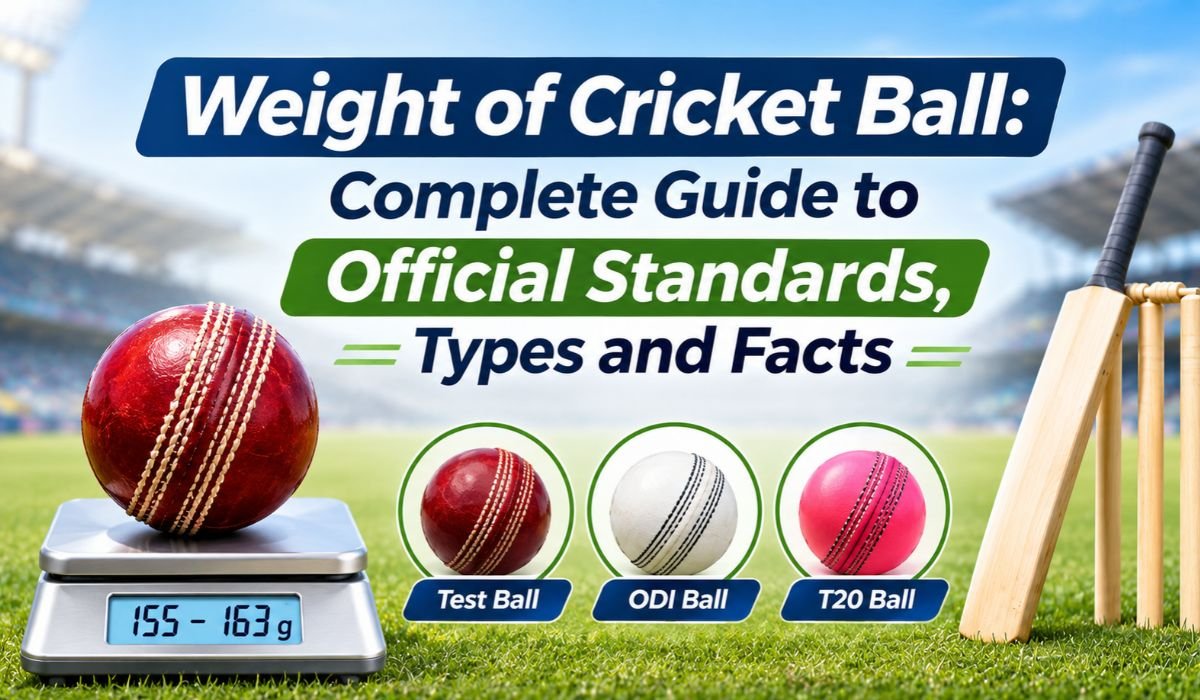
| Men’s | 155.9 to 163 g | 22.4 to 22.9 cm |
| Women’s | 140 to 151 g | 21.0 to 22.5 cm |
| Junior (under 13) | 133 to 143 g | 20.5 to 21.5 cm |
Before making a purchase, always verify what the label says. This is particularly true when buying a product for a junior player. If a ball is too heavy for a junior player, it may result in bad technique or an injury.
How a Cricket Leather Ball Behaves in Play
Bowling is a very diverse and interesting art due to how a cricket leather ball travels through the air and off the pitch.
- Swing: A different amount of air will flow over each side of the ball if one side remains smooth (shiny) while the other becomes rough. This results in the ball curving in the air. Swing can be most effective when using a new ball in a moist environment.
- Reverse Swing: As the ball ages and one of its sides becomes worn down, it may begin to swing in the opposite direction from which a batsman would expect, typically at a very fast rate.
- When a raised seam comes into contact with the pitch, it may cause the ball to deviate sideways. A harder, newer ball that has a strong seam will have a greater effect than one which is soft and old.
- The way that a bowler is able to get a sharp break on the ball (particularly when the pitch is dry), is due to the way that the seam and the grip of the leather allow him to cause the ball to spin.
- Bounce: A harder ball with a good core bounces higher and more consistently.
The way a ball acts during a game changes because as a ball gets older, the seam becomes flatter and the cover gets damaged. Because of this, captains decide when they want to use a fresh ball and why they watch how the ball is doing.
How to Maintain a Cricket Leather Ball
A properly maintained cricket leather ball will last longer and perform at a higher level than one that is poorly maintained. To achieve this follow these guidelines:
- Be sure to keep your leather balls dry. Moisture will cause the leather to expand, and weaken the stitching. Always dry the ball off with a clean cloth after using.
- Polish only one side of the ball. To keep it shiny and help with its swing, use a soft cloth and apply very little pressure on that same side.
- Avoid the ground. Rough surfaces scuff the cover and damage the seam.
- Apply a small amount of conditioner. A very thin layer of ball wax or high-quality oil will keep the leather pliable, but applying too much may cause it to become slick.
- Store properly. Keep in a cool, dry area that is out of direct sunlight and heat.
- Change up the practice balls. Rotating the balls used during each of your sessions will prevent premature wear.
Never utilize aggressive chemical products or abrasive materials. They damage the finish on the racket, and they may violate the rules of the sport when playing in a match.
Buying Guide: Choosing the Right Cricket Leather Ball
A couple of things to check before buying a leather cricket ball can be the difference between making a great buy and wasting money.
- Purpose: Select a match-quality ball for matches and a less expensive ball for practice or casual play.
- Colour: Pick red for long-format play and white for limited-overs cricket.
- Size and weight: Match the ball to the player’s age and category.
- Stitching and seam: Look for even, tight stitching and a prominent seam.
- Construction: Four-piece balls are more durable and hold their shape better.
- Brand reputation: Established brands have consistent quality control.
- Price: Quality costs more, but you do not need a premium ball for every session.
| Grade | Typical Use | Relative Price |
| Practice | Nets and casual sessions | Low |
| Club or match | League and school matches | Medium |
| Professional | Top-level matches | High |
Prices are different for each manufacturer, location and seller, therefore it would be beneficial to review multiple sellers prior to making your purchase. To prevent purchasing counterfeit products, you should purchase your goods from a reliable store or through an authorized dealer of the manufacturer.
Safety When Using a Cricket Leather Ball
A hard ball moving quickly can result in significant injury. Anyone batting should put on a helmet with a face guard, pads, gloves, and abdominal guard. In addition to that, fielders near the bat should also put on protective gear. Younger players should utilize the correct lighter ball and be supervised during practice. Prior to playing, always inspect the ball for cracks or loose stitches as a damaged ball will act differently than a normal ball.
Conclusion
The cricket leather ball is much more than just another item of equipment. A ball’s composition – a cork core, wound string, leather cover, and raised seam – determines how the game progresses from the first over to the last. Understanding the differences in red, white, and pink balls; between Duke, Kookaburra, and SG balls; and between practice and match grade balls will allow you to make informed purchases. If properly maintained, a quality ball should last you numerous sessions.
Frequently Asked Questions
1. What is a cricket leather ball made of?
The baseball has a cork center wrapped by a tight winding of string, which is then covered with a sewn, dyed piece of leather. A heavy waxed thread stitches the seam together.
2. How much does a standard men’s ball weigh?
Under the Laws of Cricket, a men’s ball weighs between 155.9 and 163 grams.
3. Why are there different colours of balls?
Red is traditionally the color of choice for longer-format cricket, while white is the preferred color for limited-overs matches as it can be seen more clearly under floodlights, and pink is the color selected for day-night test matches.
4. How many overs does a new ball last in Test cricket?
In test matches of cricket, a new ball can be used by teams at any time after 80 overs have been played. However, some team leaders choose to continue using the same old ball.
5. What is the difference between Duke, Kookaburra and SG balls?
Duke cricket balls use a prominent seam which assists with the movement of the ball through the air (swing), whereas Kookaburra cricket balls will become softer earlier on in an innings and thus give the batsmen an advantage during the later stages of an innings. Finally, SG cricket balls use a raised seam that is helpful for spin bowling and reverse swing.
6. How can I make my ball last longer?
Keep the product dry, clean after each use, only apply polish on one side of the product, stay off of rough surfaces, and store the product in a cool, dry area





Leave a Reply